When is Virtual Reality real enough? Using VR in spatial cognition research
Abstract
Although the use of Virtual Reality in spatial cognition research is becoming more and more widespread, there is little guidance on what kind of VR setups and experimental paradigms are most suitable for specific situations and research questions. This might result in a number of issues, such as suboptimal use of equipment and insufficient transferability of results to the real world.
The aim of this half-day workshop is to discuss and raise awareness of these issues, and take first steps in tackling them. The workshop will start with a brief introduction of the current state of VR in spatial cognition research, followed by individual talks on specific research projects in this area. The workshop will conclude with a general panel discussion.
Attendees will leave with an improved understanding of the advantages and challenges of using various VR setups to address different research questions. No prior VR knowledge or experience is required for attendees.
Important dates:
Workshop date: August 31, 2012, from 8:30–12:00, as part of the Spatial Cognition 2012 conference
Organizers:
 Bernhard Riecke (Simon Fraser University)
Introductory short presentation: “When is Virtual Reality Real Enough? Embodied vs. Disembodied Spatial Cognition in VR”
 Klaus Gramann (Technical University Berlin)
Introductory short presentation: “Disembodiment in VR Spatial Cognition Research: a Neuroscience Perspective”
Presenters:
 Frank Steinicke (University of Würzburg)
“Making Small Spaces Feel Large: Self-Motion Perception, Redirection and Illusions”
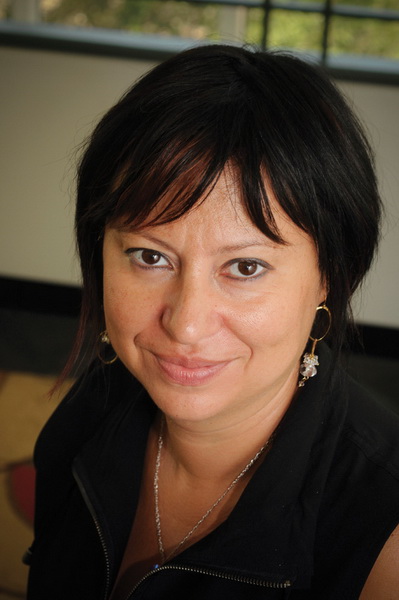 Maria Kozhevnikov (Harvard Medical School, University of Singapore)
“Understanding immersivity from cognitive neruoscience perspective”
 Christian Doeller (Radboud University Nijmegen)
“Virtual reality in neuroscience: bridging between cells, systems and behaviour”
 Nicholas Giudice (University of Maine)
“Moving beyond the vision-only bottleneck: Using multimodal information in virtual reality research”
Tentative Timeline
8:30 - 10:00, Part 1: Presentations
8:30: Bernhard Riecke (Simon Fraser University)
Introductory short presentation: “When is Virtual Reality Real Enough? Embodied vs. Disembodied Spatial Cognition in VR”
Propose general guidelines:
- as we have limited time we’ll need to reduce questions during talks — instead, please jot down your thoughts&questions you’d like to discuss in during second part of the workshop
-
- we’ll hand out post-it notes, and invite you to put them on the wall before/during coffee break, so we can start gathering, categorizing & prioritizing potential discussion questions
- use coffee break to start brainstorming & gather around discussion topics etc.
8:45: Klaus Gramann (Technical University Berlin)
Introductory short presentation: “Disembodiment in VR Spatial Cognition Research: a Neuroscience Perspective”
8:55 Frank Steinicke (University of Würzburg)
“Making Small Spaces Feel Large: Self-Motion Perception, Redirection and Illusions”
9:10 Maria Kozhevnikov (Harvard Medical School, University of Singapore)
“Understanding immersivity from cognitive neruoscience perspective”
9:25 Christian Doeller (Radboud University Nijmegen)
“Virtual reality in neuroscience: bridging between cells, systems and behaviour”
9:40 Nicholas Giudice (University of Maine)
“Moving beyond the vision-only bottleneck: Using multimodal information in virtual reality research“
9:55: wrap-up & outlook of session 2 (Bernhard)
10:00-10:30 coffee break
Suggestion: use coffee break to put up your post-it notes with discussion questions & start brainstorming & gathering around discussion topics…
10:30-12:00, Part 2: Brainstorming, Breakout group discussion & Final Plenum Discussion
10:30 Overview of possible discussion questions based on your post-it notes
10:35 Brainstorm more questions, gather (e.g., Bernhard using MindMap software?), decide on most interesting discussion topics (open questions).
10:40 break out into groups of about 5 people with one main focus question
- decide on notetaker (should have laptop or use flipchart) to summarize essence of discussion.
- decide on group reporter (who will briefly present essence of discussion/insights to plenum: New insights? Suggestions? Tips&Tricks? New questions? What stood out for you or was surprising/most exciting/stimulating/useful? How could we use the insights in the future? Ideas for future projects/collaborations?)
- make sure all team members contribute
- if internet access is available: write directly into shared google doc, else use memory stick or pass network cable around…
11:30 break-out groups present results in plenum
11:50–12:00 Conclusions, outlook, potential next steps
General Structure
Part 1: Introduction and Presentations
This half-day workshop will be divided into two parts. First, Bernhard and Klaus will briefly introduce the overall topic, provide a bit of a background on embodied vs. disembodies spatial cognition in VR, and conclude by raising some questions and current challenges, thus framing the upcoming presentations and discussions. This is followed by 4 experts (see above) presenting and discussing their research and experience with using VR setups in the context of spatial cognition research, as indicated above. Further discussion topics might include:
- The role of physical motion cues in spatial orientation
- Sensory conflicts and simulator/motion sickness
- Different display parameters and their effects
- The use of self-motion illusions to “fake” physical motion
- Different strategies for and underlying neural representations of spatial orientation in VR
Part 2: Interactive Brainstorming and Discussion Workshop
The second half of the session will be more interactive and workshop-style: After a short brainstorming session, we will collect and organize the most interesting and relevant discussion topics, and will spend the remaining time discussing these in smaller groups (depending on the overall workshop size). Topics might include
- the current state and future of VR in spatial cognition research
- experiences, strategies and challenges in using VR as a research tool
- guidelines for its optimal usage.
One or more notetakers will directly document these discussions, and we will put the outcome of the workshop online soon afterwards (at least for participants). If there’s sufficient interest, energy, and excitement, we hope this might kickstart further discussion and collaboration.
Organization and goal:
Virtual Reality can be a highly useful research platform in spatial cognition. It provides a unique opportunity to study human perception and behavior in immersive, multi-modal and naturalistic virtual environments under reproducible and controllable experimental conditions.
For an example, imagine a researcher studying human navigation in city environments. A typical experiment in this field might measure participants’ orientation and sense of direction as they navigate in an actual city. This presents some challenges. For one, the researcher must select an existing environment to use. As the selection pool is usually limited by geographical location, the researcher might have to settle for an environment that is less suitable than what she had in mind. Also, she must relinquish control of several possible confounds that can affect the validity of her study. These include prior knowledge, weather, visibility, sound, orienting cues like the direction of sunlight, wind, or global landmarks, and other interference or confounds from the environment.
Under the right circumstances VR provides an elegant solution to these problems. Rather than settling for an existing environment, a virtual city can be built according to exact specifications. Environments can even be adjusted and changed on-the-fly as needed. Confounding variables can be significantly reduced, as more factors can be directly controlled and measured. Finally, depending on the situation, a VR-based study can be safer and more cost-effective than a corresponding study performed in the real world, such as research into spatial cognition during flight or potentially dangerous situations like evacuation scenarios.
However, the usefulness and utility of VR in research critically depends on the specific circumstances. That is, it can be beneficial or detrimental to study validity and real-world transferability, depending on the task, environment or research focus. Correctly evaluating under what conditions which kind of VR setup might be most suitable can be challenging, especially as technology advances. It is often simply assumed that a give VR setup is suitable and provides real-world transferability, simply because it is a costly and state-of-the-art setup. This is, however, not necessarily the case, as will be discussed in the workshop.
Our goal with this workshop is to raise awareness for these issues, share and discuss relevant findings and experiences, and thus enable researchers to make more informed decisions regarding the usage and utility of different types of VR setups and interaction paradigms in their research. Participants will leave with a better understanding of when they can use VR to their advantage and how they can go about implementing it. In addition, we hope to strengthen a network of researchers in this area that will extend beyond the time of the workshop.
Potential Participants:
This workshop will be most beneficial to researchers who actively design and carry out studies in spatial cognition and currently use or plan on using VR technology to do so. This includes studies of spatial navigation, orientation, memory, learning, wayfinding, and other fields that rely on experimental paradigms.


