
Position:
Phd Student
Contact:
erstepan [at] sfu.ca
http://ispace.iat.sfu.ca/person/Katerina-Stepanova
Affiliations:
Biography
Katerina graduated from the Cognitive Science program with honours from SFU and continued into a graduate program at iSpace lab where she completed her MSc and continued into PhD program.
She strives to understand how the immersive powers of modern technology can be leveraged to help people become more connected with themselves, each other and the world around them. Through an embodied cognition and phenomenological lens, she explores the possibility of creating transformative and intimate experiences with the use of Virtual Reality and biofeedback, and studying them in controlled lab conditions as well as in a public setting in a form of art installations.
She is fascinated by different ways of creating knowledge in art, science and humanities, and as such engages with a variety of quantitative and qualitative methodologies, such as research through design, experimental design, physiological measures, behavioural measures, observational studies, micro-phenomenology, hermeneutic phenomenology, autoethnography, and close reading.
In 2022 Katerina has conducted research visits and internships with Kristina Höök at KTH University in Stockholm sponsored by SSHRC Michael Smith Foreign Study Scholarship Supplement, and with Alexander Stahn at Charité Universitaetsmedizin in Berlin sponsored by DAAD research grant.
Outside the lab she explores the outdoors by climbing mountains, biking, kayaking and snowboarding, finding her inspiration in experiencing a connection with the spectacular nature of British Columbia, or practising yoga or swing dancing to foster bodily awareness which in turn informs her research.
Select Grants & Awards
SSHRC Joseph-Armand Bombardier Canadian Doctoral Scholarship (2021−2024)
German Academic Exchange Service (DAAD) Short-term Research Grant (2022)
Projects
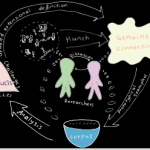
Design Strategies for Genuine Connection
There is a prominent interest in the potential of technology for mediating social connection, with a wealth of systems designed to foster the feeling of connection between strangers, friends, and family. In this project, we are exploring this design landscape to derive a transitional definition of mediated genuine connection and design strategies employed by artists and designers to support the f...
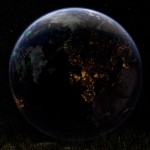
SIRIUS - Virtual Earthgazing to mitigate effects of sensory isolation
SIRIUS (Scientific International Research in Unique Terrestrial Station) is a series of on-land isolation experiments modelling long-term spaceflight in order to assess the psychophysiological effects of isolation on a crew and prepare for long-duration spaceflights, such as a trip to Mars. An 8-month-long isolation study commenced in Moscow on Nov 4th, 2021, where a crew of 6 people (from Roscosm...
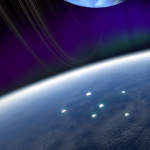
Virtual Transcendent Dream
Flying dreams have the potential to evoke a feeling of empowerment (or self-efficacy, confidence in our ability to succeed) and self-transcendent experience (STE), which have been shown to contribute to an individual’s overall well-being. However, these exceptional dreaming experiences remain difficult to induce at will. Inspired by the potential of Virtual Reality (VR) to support profound emoti...
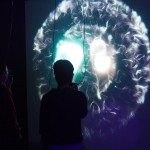
Breath of Light
One must first come to know, through observing oneself — just what one does with breathing. - Elsa Gindler Breath of light is a generative interactive installation, exhibited at the 13th Shanghai Biennale. The installation aims to foster a feeling of connection and awareness through the process of breathing synchronization. Each of the two participants generates their own light with their breat...
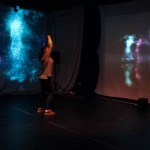
Body RemiXer
Extending Bodies to Stimulate Social Connection in an Immersive Installation Body RemiXer connects bodies through movement. It is an experiential projection based Virtual Reality installation that explores novel forms of embodied interaction between multiple participants where their bodies mix into a shared embodied representation producing a playful interaction that aims to support the feeling o...

Connecting through JeL – bio-responsive VR for interpersonal synchronization
Can a bio-responsive generative art installation foster interpersonal synchronization and connection? JeL is a bio-responsive, immersive, interactive, generative art installation designed to encourage physiological synchronization between the immersants. In this project, we will be exploring how novel forms of interaction can be included in immersive technology to foster the feeling of connection...
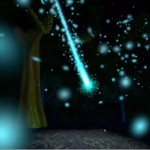
Connected through "AWE": creating immersive experiences for social connection
Do you get enough “awe” in your life? In our busy day-to-day lives, we often take our experiences for granted. While we have the technology to connect with one another, like smart phones, we don’t necessarily get outside with nature, or stargaze. Such activities may consist of common awe-inspiring moments, and we now understand that feeling awe is associated with all sorts of social and well...

Virtual Earthgazing - towards an overview effect in Virtual Reality
How can we use immersive VR to give people pivotal positive experiences without having to send them out into space? “We went to the Moon as technicians, we returned as humanitarians” reflected Edgar Mitchell after his space flight. This describes the overview effect – a profound awe-inspiring experience of seeing Earth from space resulting in a cognitive shift in worldview, le...
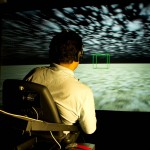
Lean and Elegant Motion Cueing in VR
How do we best design locomotion interfaces for VR that provide "enough" physical motion cues (vestibular/proprioceptive) while still being effective, affordable, compact, and safe? Despite amazing progress in computer graphics and VR displays, most affordable and room-sized VR locomotion interfaces provide only little physical motion cues (e.g., vestibular & proprioceptive cues). To provide...
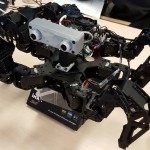
Immersive & Embodied Teleoperation Interfaces
Developing virtual interfaces for embodied tele-operation and locomotion. How can we best design and implement an embodied telepresence system for tele-robotics, so we can safely explore remote, hard-to-reach, or potentially hazardous areas or situations? The goal of the "TeleSpider" project is to design and implement a telepresence system where users can remotely operate a robotic spid...
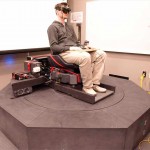
Spatial Updating With(out) Physical Motions?
How important are physical motions for effective spatial orientation in VR? Most virtual reality simulators have a serious flaw: Users tend to get easily lost and disoriented as they navigate. According to the prevailing opinion, this is because physical motion cues are absolutely required for staying oriented while moving. In this study, we investigated how physical motion cues contribute ...


